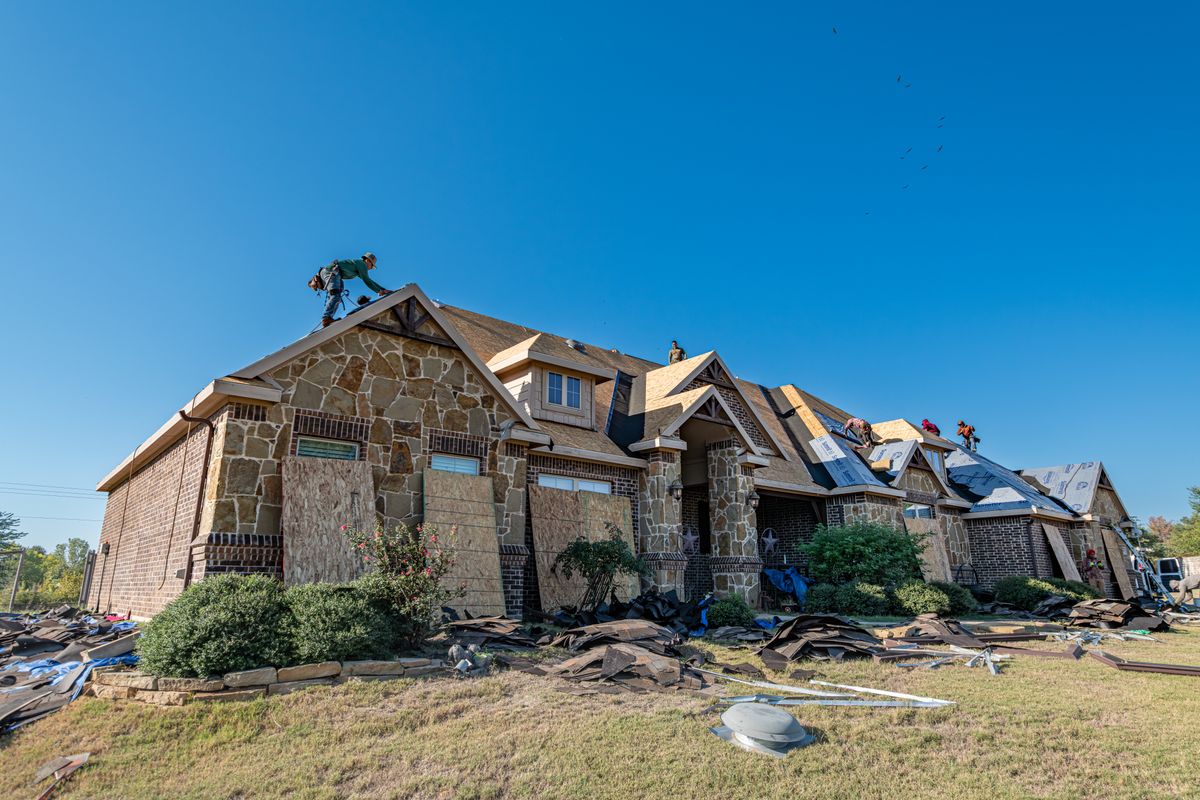
Your roof is your home's most critical protective system. Every wall, every ceiling, every piece of furniture and personal belonging inside your home is protected by what's above it. When your roof begins to fail, the consequences compound quickly - water intrusion leads to mold, mold leads to structural deterioration, and structural deterioration leads to repairs that dwarf the cost of a timely roof replacement.
In Texas, the consequences of a failing roof can be particularly severe. Our climate exposes roofs to intense UV radiation, dramatic temperature swings, severe hailstorms, and heavy rain events. A roof that's struggling anywhere in the country will struggle faster here. The key is recognizing the warning signs early, when your options are broadest and your costs are lowest.
Here are the seven warning signs that your roof is failing - along with what they actually mean, what causes them, and what you should do about each one.
Warning Sign 1: Your Roof Is Old
Age is the most important single factor in assessing your roof's status. While a roof's appearance can be maintained through cleaning and spot repairs, the underlying materials have a finite lifespan that cannot be reversed.
In Texas, the expected lifespans of common roofing materials are:
- 3-tab asphalt shingles: 15–20 years (shortened by Texas heat)
- Architectural asphalt shingles: 20–25 years in DFW conditions
- Metal roofing: 40–70 years
- Clay or concrete tile: 40–50+ years
- Flat roofing systems (TPO, EPDM): 15–25 years
If your asphalt shingle roof is approaching or has passed the 20-year mark, it's time for a professional evaluation even if everything appears fine from the curb. Critically, if your home was re-roofed by laying new shingles over existing shingles (a practice that was common but is no longer code-compliant in most Texas jurisdictions), the effective lifespan of that installation is further reduced.
Also consider: if you purchased your home and don't know its roofing history, check with a professional. Older homes in the DFW area often have roofs with undocumented prior work.
Warning Sign 2: Shingles Are Curling, Cracking, or Missing
Healthy asphalt shingles lie flat against the roof deck. When shingles begin to curl - either at the edges (a condition called cupping) or upward from the center (called clawing) - they are telling you that the asphalt is drying out and the mat beneath is losing its integrity. Once shingles curl, they're much more vulnerable to wind uplift, and a single storm can remove large sections.
Cracked shingles result from UV degradation and extreme temperature cycling. Texas's summer heat causes shingles to expand; our occasional winter cold snaps cause them to contract. After years of this cycle, the asphalt becomes brittle and cracks develop. Cracked shingles allow water infiltration that standard weathering would otherwise prevent.
Missing shingles are the most immediately obvious problem. Even a single missing shingle exposes the felt underlayment beneath - which is not designed for prolonged UV and weather exposure - and allows water to reach the wood decking. A missing shingle after a wind event should be treated as an emergency repair, not a "wait and see" situation.
Warning Sign 3: Heavy Granule Loss
The ceramic granules embedded in the surface of asphalt shingles serve two critical functions: UV protection and fire resistance. They're what give shingles their color and texture. As shingles age, these granules loosen and wash off - and you can track this process by looking in your gutters.
Some granule loss is normal, especially from a newer roof that's shedding factory-applied excess granules. But heavy, ongoing granule accumulation in gutters from an established roof is a serious warning sign. Look for:
- Granule-filled gutters and downspout discharge areas
- Bare or inconsistently colored patches visible on the roof surface
- Shingles that appear lighter in color than they did when installed (indicating surface granule loss)
Hail accelerates granule loss dramatically. A single hail event can remove significant granule coverage from a large section of your roof, effectively shortening its remaining lifespan even if no shingles are visibly cracked or broken. This is why post-hail inspections by a professional matter - damage that's invisible from the ground can significantly affect your roof's remaining useful life and your insurance claim.
Warning Sign 4: Light in Your Attic
On a sunny day, take a flashlight to your attic and turn it off. Let your eyes adjust. If you can see sunlight coming through the roof boards, you have a serious problem - and almost certainly a much larger one than the small amount of visible light suggests. Any penetration large enough to admit light is also admitting water, insects, and air, all of which cause ongoing damage.
While you're in the attic, also look for:
- Water stains or dark discoloration on the rafters or sheathing
- Soft or spongy areas in the sheathing (can be felt with a probe or gloved hand)
- Mold or mildew growth on any wood surfaces
- Insulation that has been compressed, discolored, or displaced by water
Water staining in the attic that appears dry may indicate an intermittent leak - one that only manifests during heavy rain or specific wind directions. Don't dismiss dry staining; it tells you water has been there and will return.
Warning Sign 5: Sagging or Structural Deformation
A sagging roofline - visible as a wave, dip, or soft spot in the roof deck - is one of the most serious warning signs on this list. Sagging indicates structural damage that has already progressed significantly: typically either damage to the roof decking (sheathing) from long-term moisture exposure, or damage to the underlying rafters or trusses.
Causes of roof sagging include:
- Long-term water intrusion rotting the sheathing from beneath
- Inadequate original framing for roof load (especially on older DFW homes)
- Damage from fallen tree limbs or other impact
- Accumulated weight from multiple layers of roofing material
If you observe sagging, contact a professional immediately. This is not a wait-and-evaluate situation. A structurally compromised roof can fail under the weight of a Texas rainstorm, causing the roof deck to collapse into the living space. The cost of repair or replacement is significant, but it pales against the consequences of structural failure.
Warning Sign 6: Persistent Leaks Despite Multiple Repairs
A single roof leak, properly repaired, should not recur. If the same area of your ceiling shows water staining after each rain - or if you've had the same area "repaired" by a contractor two or three times - the underlying cause has not been properly addressed.
Recurring leaks typically indicate one of several problems:
- The repair addressed the symptom but not the cause (i.e., re-caulked flashing when the flashing itself needed replacement)
- There are multiple sources contributing to the same interior stain
- The underlying decking has rotted to the point where shingles cannot seal properly against it
- The roof's overall integrity has deteriorated enough that water finds a path even after targeted repairs
At a certain age and condition, continued repair costs more over five years than a new roof would cost upfront. A trusted roofing professional can help you calculate this break-even point.
Warning Sign 7: Rising Energy Bills Without Explanation
Your roof is a significant component of your home's thermal envelope - the barrier between conditioned indoor air and the Texas heat outside. A failing roof often means failing insulation and air sealing, allowing conditioned air to escape in summer and winter alike.
If your energy bills have increased materially without a change in your usage habits, HVAC equipment, or utility rates, your roof may be contributing. Specific mechanisms include:
- Damaged or displaced attic insulation from water intrusion
- Failed attic ventilation allowing heat buildup that overwhelms cooling systems
- Deteriorated radiant barrier (if your attic has one)
- Air infiltration through gaps around penetrations or at damaged areas
What to Do If You're Seeing These Signs
The single best thing you can do if you recognize one or more of these warning signs is to schedule a professional inspection. A thorough inspection gives you specific, documented information about your roof's current condition, the extent of any existing damage, the probable remaining useful life, and honest recommendations for whether repair or replacement is the right financial choice for your situation.
Commit Roofing provides free, comprehensive roof inspections to homeowners throughout Allen, McKinney, Frisco, Celina, Plano, Garland, Carrollton, Irving, and the greater Dallas area. We provide written reports with photos - never a vague verbal assessment - and we give you our honest recommendation, not the one that maximizes our revenue. Contact us today to schedule your inspection.